EXTREME STIHL String Trimmer Durability Test - STIHL FS 91
|
|
Time to read 7 min

|
|
Time to read 7 min
Table of contents
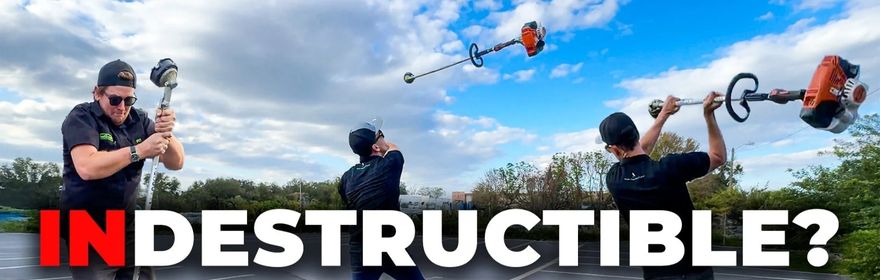
When it comes to professional-grade outdoor equipment, people want gear that lasts. The STIHL FS 91 has a reputation for durability, built for tough jobs and long workdays. But what happens when you take it far beyond normal use? That’s exactly what happened in Main Street Mower’s “Destroying a STIHL String Trimmer in 14 minutes - Extreme Durability Test.” Stu and Chip put this string trimmer through grueling tests, dragging, submerging, abusing, and even tossing it to see just how much it can take. The goal? To find out if the FS 91 is really the toughest string trimmer around.
If you work in landscaping or simply care about reliable power tools, this is one review you don’t want to miss. Below, you’ll get a full breakdown of each test, what happened, and insights on the trimmer’s strengths (and weak points).
The STIHL FS 91 R Gas Powered String Trimmer is made for demanding professionals. Designed with rugged durability and a powerful gas engine , it’s built to cut through thick grass, stubborn weeds, and challenging terrain. STIHL’s FS series is known for reliability and a solid build, making it a top pick for commercial crews and homeowners who want the best.
Key features include:
STIHL claims the FS 91 is both “professional” and “durable,” but this test takes things up a notch. The video’s mission isn’t to treat the trimmer nicely, but to push it to the edge of destruction and see what fails first.
Every landscaper uses the bump feed head to release fresh trimmer line. But how many times can you smack it before something gives out? Stu and Chip started the day by hammering the trimmer’s bump head on asphalt and concrete, again and again—rougher than any typical workday use.
Here’s how they did it:
Key Observations:
This challenge highlighted the head’s remarkable toughness. The abuse was far beyond what any lawn would ever see, yet the STIHL FS 91 kept on spinning. Only extensive, nerve-wracking melting at the edges required a head replacement. The test set the tone for the rest of the day: the FS 91 was in for a real beating.
To take things further, the team flexed, bent, and dropped the trimmer over and over. Many tools would show cracks, loose parts, or stop working after such severe treatment.
What was done:
Early in the test, the trimmer survived a wild number of “handle bends” and random tugs. There was a clear comment on just how much abuse the handle and shaft could take. “We’re just flexing that handle,” the team admitted, marveling at the lack of immediate failure.
Suddenly, a spring popped out during one extreme test, and a noticeable curve appeared in the shaft. Yet, the unit still started up on the first pull, showing the reliability of the engine’s design.
Paying attention to these simple details makes your gas trimmer last longer, even if you never treat it half as rough as this test.
To mimic long-term field abuse, the test shifted from bumping to dragging. The FS 91 was pulled across concrete, asphalt, and even rougher surfaces. Imagine a trimmer bouncing behind a truck, scraping and dragging for blocks.
Surfaces Tested and Effects Observed:
Even after the abuse, the team was able to “straighten” the shaft using a simple, nearly comical technique—just flexing and rolling it by hand. The phrase “cannot kill it” kept coming up as the trimmer spun up on the next start.
Despite ground-down gearbox edges and chewed-up plastic, everything was still intact. This part of the test proved the robust construction of the FS 91, especially for gearboxes and drive shafts designed for repeated ground impacts.
What if you drop your trimmer from a ladder or the bed of a truck? Most tools hate being dropped, so the crew tried this again and again.
Drop Test Details:
Results:
The trimmer’s “start like a baby” engine made it clear: it kept running even after violent treatment. For ordinary users, this means dropping your trimmer now and then probably won’t cause any major problem.
Not many people think about getting their trimmer wet. Still, heavy rain or working near water can pose a risk. The Main Street Mower team dunked the entire FS 91 into a retention pond (with the air filter area mostly above water).
Here’s what happened:
Keep in mind:
Never let water enter the air filter or muffler area. That could cause total failure.
Checklist for Trimmer Water Safety:
The FS 91 wasn’t built for marine work, but it handled unintentional plunges far better than most gas-powered gear.
To mimic years of neglect, Stu and Chip removed the air filter and shoved dirt—and even some live ants—right into the filter and grease compartments.
What unfolded:
Bold reminder : Always keep your air filter clean, and never operate your trimmer with missing or broken covers.
Step-by-step cleaning after heavy use:
Taking things to the max, the team threw the trimmer up to 30 feet in the air, letting it crash onto solid pavement over and over.
Observations:
This was the point of no return—showing every tool, no matter how tough, has its limits.
Still working after extreme abuse, the FS 91 might not survive as a pogo stick, but tossing, dropping, and dragging wouldn’t slow it down much.
After thousands of bumps, violent drops, water immersion, and pure neglect, the STIHL FS 91 demonstrated serious durability. To break it, you’d have to go way beyond normal use.
Strengths:
Weak Points:
Tips for Making Your STIHL FS 91 Last:
For more on string trimmer care and performance, check out Main Street Mower’s other videos:
Links to Main Street Mower


